

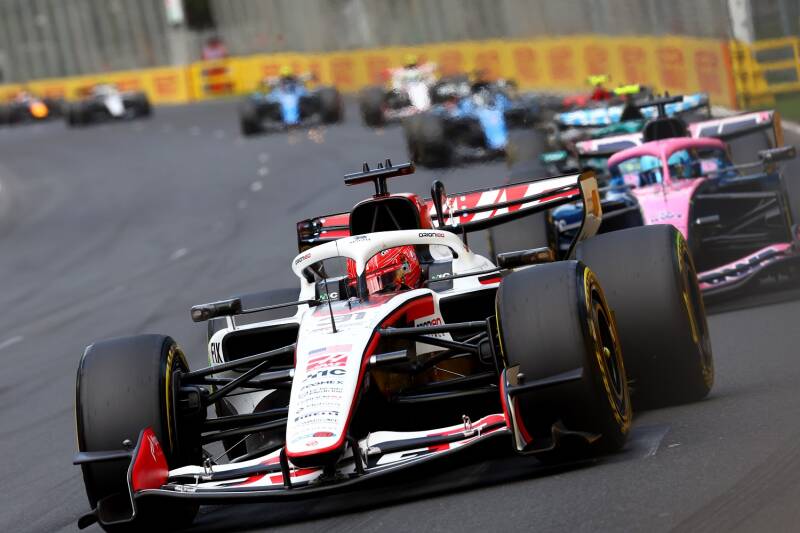
After some years of close margins from the front to the back of the field, the 2026 reset has produced huge difference between the top teams and the midfield.
The closing gap
Until the end of 2025 F1 witnessed the unprecedented trend that saw the backmarkers clocking just over a second slower than the front runners. This has been achieved through the budget cap rules and the limited wind tunnels and CFD time that set the performance ceiling to much closer level to the low budget teams.
There were podium sitters from 7 teams out of 10 in 2025, and the fight at the back was fierce with every team scoring good points throughout all the season. The room for error for the top-8 drivers was minimal and a mistake could’ve resulted in a Q2 or Q1 exit in qualifying.
Trend inverted
Among all the new things that Melbourne told us, there’s the sensation, based on quali and race results, that the field is more widely spread out than the last 4-5 years. To find gaps like the ones at the end of Sunday’s race in Australia we have to go back to 2019 when Mercedes, Ferrari and Red Bull (with the only Verstappen) were the only 3 teams in the mix for the podium. Renault, that at the time was the fourth team, was a second off the top-3’s pace nearly everywhere.
F1 in 2026, with its revolution, sold us the idea of a major shakeup of the order but the first race was a big reality check with the same top-4 teams in a league of their own (Mercedes a step ahead of everyone) and the rest of the field miles behind at the end with Ollie Bearman, the 7th placed driver, being lapped way before the end of the race.
With a rule change of these dimension it’s not a surprise that the bigger teams with the bigger resources pulled away from the smaller competitors.
What the numbers said

If we look at the Q3 laps, we have Mercedes 0.8 seconds ahead of the close pack of Red Bull, Ferrari and Mclaren (the distance from Russell may be less for these teams). Then, the next car was the Racing Bull with Lawson timed at a staggering 5 tenths distance from Hamilton who encountered problems in managing power delivery.
Looking at the smoothened race pace, removing outliers, the picture is even much more clear. From Mercedes to McLaren (which was the 4th fastest car) there’s a 0.5 second/lap difference which isn’t a small gap but is nothing if compared to the front midfield composed by Haas, Audi and VCarb that was over 1.5 seconds slower every lap. However it doesn’t end here as even in the midfield there are a lot of differences as Alpine and Williams find themself nearly at 2.5 sec/lap behind while Cadillac (lapped three times) and Aston Martin (for now) are at 3.5/4.0 seconds off the pace.
An evolving situation
After the first 3 races there will be a break over a month long (Bahrain and Saudi likely to be cancelled) that will represent the first opportunity for development and fixings to arrive in May with possible gains and losses especially in the bottom half of the grid.
The gap to the front runners will shrink a bit more in the long term, in a 2 or 3 year horizon, although some teams with great expectations for this season, Williams and Aston above all, may solve some issues and position in that 1-second-gap between the mid field and the top-4.
Aggiungi commento
Commenti